
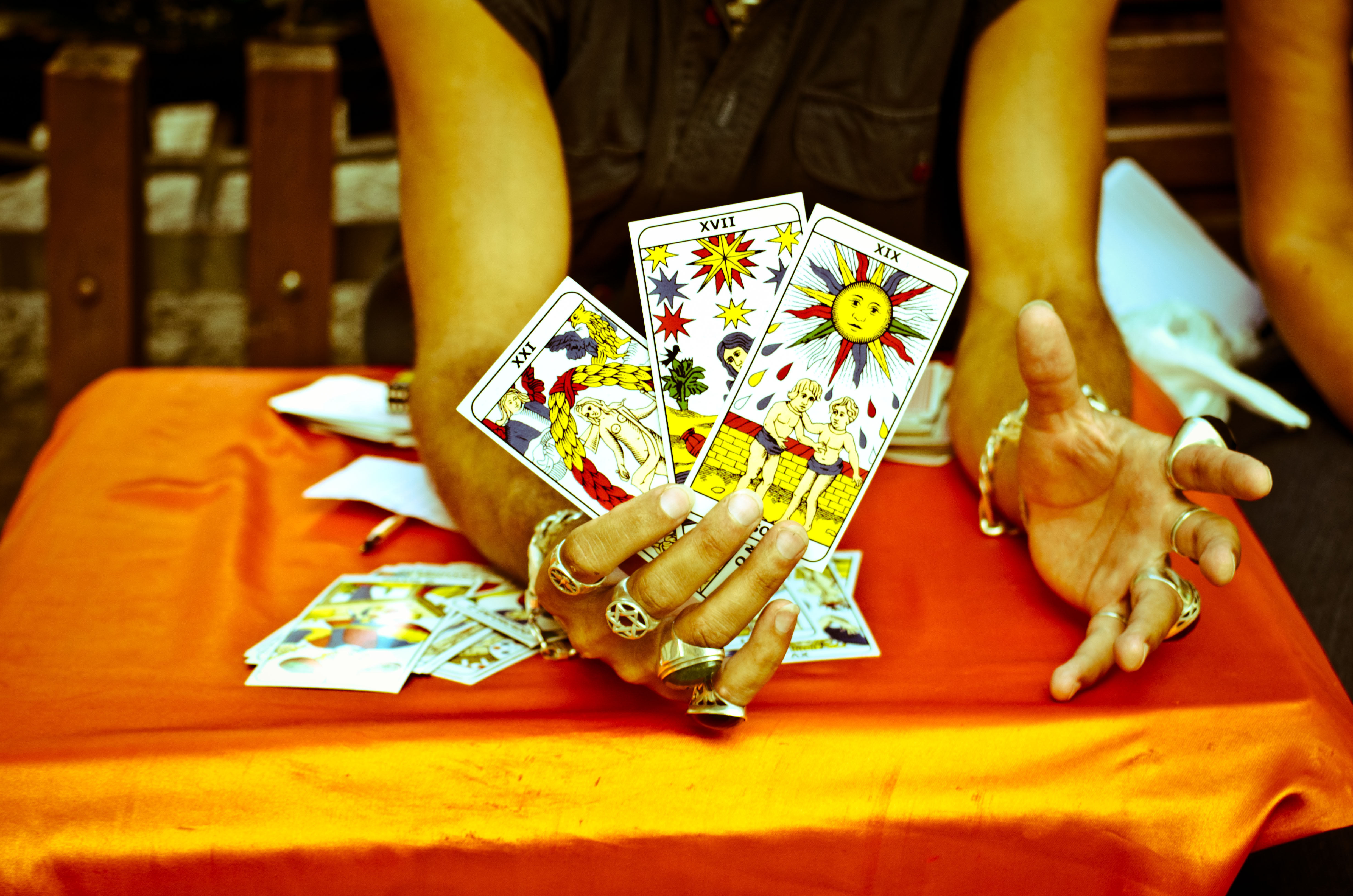
A free online tarot reading might mean a quick automated card draw, a public group reading or a limited offer from a human reader. Before you begin, find out which one you are using. The word “free” does not explain the service on its own.
Start with the format
An automated tool selects cards and displays written meanings. It can be a convenient prompt for your own reflection, but it is not a private conversation with a reader. A collective video or livestream is also different from a reading focused on your question.
A human session may have limits on time, questions or eligibility. Some advertised free minutes come with a paid purchase. Our no-cost versus paid-offer checklist explains the distinction.
Four things to find before you click
- FormatIs it automated, collective or personal?
- CostIs payment required now or afterward?
- InformationWhat are you being asked to share?
- ExitCan you stop without more charges?
A card draw does not require your life story
Read the form before filling it in. A name, birth date, email address and relationship history are personal information, even if they seem ordinary. Consider whether each detail is necessary and how the site says it will use it.
| Requested detail | What to check |
|---|---|
| Email address | Is it needed to deliver a result? Is marketing optional? |
| Birth information | Is the service explaining why it is relevant, or collecting it by default? |
| Card details | Does “free” require a purchase, authorization or continuing charge? |
| Private messages or photos | Can you ask the question without uploading another person’s information? |
Do not send passwords, verification codes, identity documents or banking credentials to obtain a tarot interpretation. For a deeper privacy check, read our guide to reading apps and personal information.
What tarot’s history does—and does not—tell you
Tarot has a history as a card game as well as a later life in spiritual practice. The Morgan Library’s Visconti-Sforza collection traces tarot decks to fifteenth-century Italy, where they were used for play. You can value modern tarot symbolism without needing an invented ancient origin to support it.
Read the result as something to explore
Choose a question about your own situation: “What deserves attention in how I approach this conversation?” Write down the card and what you notice. Compare the interpretation with what you know, rather than treating a broad statement as a confirmed fact.
A frightening card does not require you to buy a remedy. A positive card does not guarantee a relationship, payment or opportunity. You remain free to reject an interpretation.
Choose the next step that fits
If you want to try the practice, use our one-card and three-position tarot guide. If your question concerns love, explore the relationship reflection spread. You can finish with a journal note; another paid reading is not required to complete the experience.