
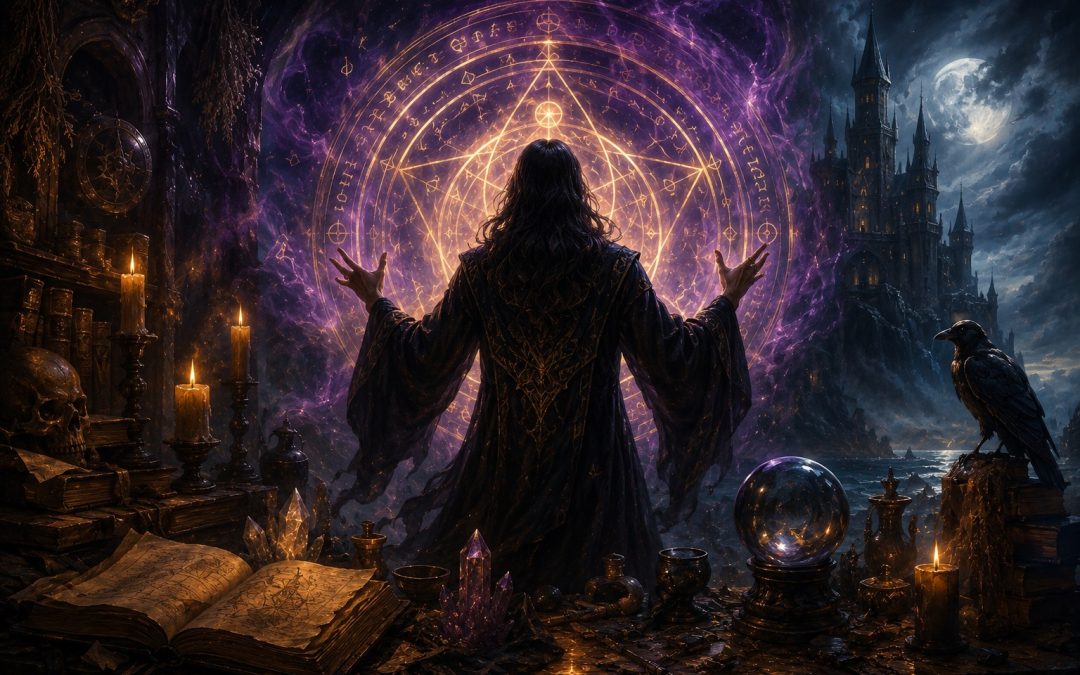
A warlock is commonly understood as a male practitioner of magic, especially in Scottish tradition and fantasy. But the word has also been an accusation, an insult and a chosen identity. Its meaning depends on who is using it—and in what setting.
The short answer
Do not assume every male witch is a warlock. A person may prefer witch, practitioner, Pagan, another tradition-specific title, or no label at all. Ask rather than assigning one.
What the historical word tells us
The Dictionary of the Older Scottish Tongue traces the term to Old English wærloga and records meanings involving the Devil, abuse and an alleged sorcerer. The later Scottish National Dictionary entry includes the familiar male counterpart of a witch, as well as wizard or magician.
These entries preserve how people spoke and wrote. They do not verify the powers attributed to accused people. Nor do they establish a single, hidden order of warlocks with one set of beliefs.
The word is often explained through the idea of an oath-breaker or traitor. That history helps explain why some practitioners dislike it. It does not mean someone who adopts the label today has broken an oath or intends harm.
Warlock, witch and wizard: what is the difference?
Warlock
A historically loaded word, often used for a male magic-worker in Scots usage and fiction. Its modern use is personal, not a universal rank.
Witch
A word used in historical accusations and by some modern practitioners. People of different genders may identify as witches.
Wizard
A familiar literary and fantasy term. In a story or game, its rules belong to that fictional world, not automatically to a living religion.
It is tempting to make a tidy chart of which person has stronger powers, uses darker magic or follows stricter rules. There is no shared real-world system that makes those comparisons reliable. Even communities using the same title may disagree about its meaning.
Why fantasy can be confusing
Novels, films and games may give warlocks a patron, a bargain or a particular source of power. Those can be compelling storytelling devices. They should not become assumptions about a neighbor, a spiritual teacher or someone you meet online.
Likewise, calling a historical accused person a healer or a rebel without examining that person’s records can replace one stereotype with another. A responsible account names the place, period and evidence rather than claiming all accusations had the same cause.
Using the word in spiritual conversation
If someone calls themselves a warlock, a useful response is curiosity: “What does that title mean in your practice?” They might be describing a personal path, an artistic identity or a particular community. You do not have to share their interpretation to speak respectfully.
- Use the name a person gives you.
- Do not treat a title as evidence of training, accuracy or authority.
- Ask permission before sharing someone else’s practices or identity publicly.
- Keep the difference between religious belief, historical evidence and fiction clear.
Judge the practice by its conduct
A dramatic title does not tell you whether a practitioner is thoughtful or trustworthy. Look at how they handle consent, disagreement, privacy and money. You should be able to decline a ritual, question a statement or leave without being threatened.
If you are exploring a practice for yourself, start with learning rather than expensive tools or promises of power. Our guide to choosing a spiritual path offers questions about values and boundaries. For a quiet daily practice, try beginner meditation.
A useful distinction
You can be interested in magic and spiritual symbolism without accepting every historical accusation—or every modern claim. A label opens a conversation; it does not settle what is true about a person.
Compelling and nuanced. The article does a fine job disentangling myth from sociopolitical function, showing how the term ‘warlock’ operated as a mechanism of exclusion. I value the emphasis on ethics and psychological framing, which converts folklore into tools for understanding agency and cultural control rather than demonizing difference.
This is an excellent synthesis of linguistic history, cultural power dynamics, and contemporary ritual practice. By tracing wǣrloga from an oath-breaker to a symbol of spiritual independence, the article illuminates how religious consolidation, social anxiety, and literary tropes converted moral labels into mythic threats. I appreciate the balanced use of anthropological and psychological perspectives—showing ritual as both social technology and coping mechanism—while urging ethical responsibility in modern reclamation. It encourages readers to separate narrative dramatization from historical evidence and to engage with spiritual identities thoughtfully.
Great follow-up: I especially liked the note about modern practitioners choosing not to use labels. That felt empowering. Whether someone reclaims “warlock” or avoids names entirely, emphasizing consent, non-harm, and psychological grounding seems like the healthiest path forward for spiritual practice.
Nice read. I appreciate how the post separates folklore from social forces, explaining that fear, politics, and control shaped the warlock image more than any concrete evidence of magic. It encourages curiosity and critical thinking while being respectful to spiritual practices.
Informative and balanced. I appreciate how the author places ritual behaviors in psychological and anthropological context, linking them to coping, intention, and social practice rather than supernatural claims. The section on reclaiming labels feels hopeful, and the ethics checklist is a sensible guide for anyone exploring these traditions.
A thoughtful piece that reframes a loaded term with nuance. I liked the way it highlights ritual as psychological practice—tools for focus and coping—rather than inherently supernatural acts. The history of labeling and marginalization feels particularly important, and the article offers constructive paths for reclaiming language with ethical awareness.