Warlock is a powerful word. For some, they think of someone in a dark cloak who is doing forbidden spells, or others might think of someone who is lurking around in folklore. Others might be curious about it, the different symbols, hidden knowledge, and the idea that this could be a rebellion against authority or a spiritual path that history is trying to hide.
Even though for centuries this has been based around fear, misunderstandings, and exaggeration, the term Warlock has not disappeared. As a matter of fact, people are more interested in warlocks now because of the rise in spiritual conversations and pop culture. People aren’t just asking what a warlock is, but they are wondering why this word is so controversial.
If you are interested in this, keep reading. This article talks about a warlock not as a supernatural being or a villain but as an idea that is shaped by power, religion, and culture. By understanding what warlocks mean, it can help you to understand the independent spiritual practices and why these labels exist even today.
Where the Term Warlock Came From
The term warlock comes from Old English roots, specifically the word wǣrloga, which originally meant something closer to “one who breaks an oath.” In its earliest use, the word had nothing to do with spells, rituals, or magic of any kind. It was a moral label, not a mystical one.
In early medieval society, oaths carried enormous weight, especially religious ones. Breaking an oath was seen as a serious breach of trust, a sign that someone could not be relied upon or was willing to defy sacred authority. Over time, that sense of betrayal began to carry spiritual consequences. People who stepped outside approved belief systems, questioned doctrine, or practiced faith in unrecognized ways were increasingly viewed with suspicion.
As Christianity spread and consolidated power across Europe, older spiritual traditions and alternative belief systems were reframed as dangerous rather than different. The word warlock slowly shifted from describing moral failure to implying spiritual threat. It became less about broken promises and more about forbidden paths. That evolution says far more about fear and control than it does about actual magical practice.
Warlocks and Magic
The association between warlocks and magic didn’t come from clear historical evidence. It grew out of stories, sermons, and cultural anxiety. Once someone was labeled untrustworthy in a spiritual sense, it became easy to imagine them engaging in secret rituals or drawing power from illicit sources.
In societies that demanded religious conformity, spiritual independence often looked like rebellion. Men who practiced healing, divination, or symbolic rituals outside sanctioned institutions were especially vulnerable to suspicion. Over time, those suspicions hardened into archetypes.
Unlike accusations of witchcraft, which were often tied to domestic fears and gendered expectations, warlocks were portrayed as intentional rule-breakers. They weren’t seen as accidental threats but as people who knowingly chose forbidden knowledge. That framing made the term feel especially menacing, not because of what warlocks did, but because of what they represented: refusal to submit.
Differences Between a Warlock and a Witch
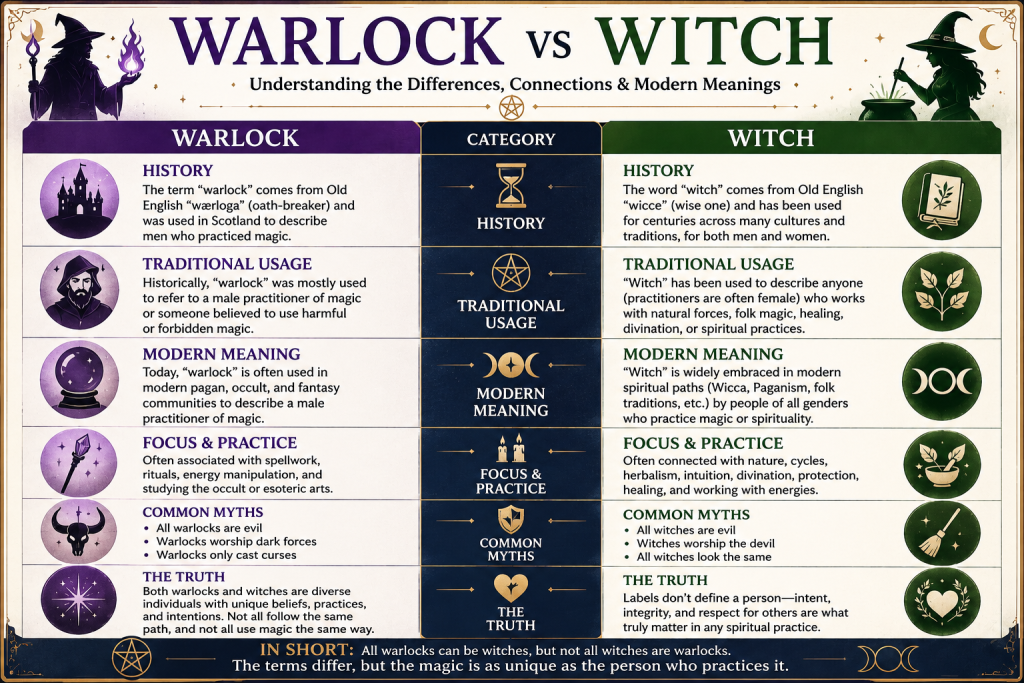
Even though the media treats warlocks as just male witches, there are more differences than that, according to history.
Gender and Power
The word witch was often applied to women and has been rooted in fear, such as emotional, domestic, and social influence that the women had. Warlock has been a word that feels like it means secrets, betrayal, and defiance of religious authority.
In different historical texts, a witch was seen as someone who seduced others or was corrupted, whereas a warlock was seen as someone who knew just what they were doing at all times.
This difference reflects power, intention, and gender that were shaped by heresy. And the difference between the two matters.
Different Spiritual Perspectives
In spiritual communities today, many people reject the word warlock because it is considered negatively in history. Others, though, are using it as a symbol of autonomy, especially for men who feel disconnected from the word witch but still practice spirituality or intuition. Today, the word is less about rules and more about the identity of the person.
Warlocks and Mythology
According to European folklore, they looked at warlocks as just solitary figures, men who would live with secret knowledge and engage in hidden rituals away from public view. Even stories would talk about warlocks, such as:
- Making bargains that were dangerous with others.
- Acting between two worlds.
- Guarding forbidden words or texts.
These stories weren’t normally neutral, but they showed fear of individuals who couldn’t be put in one category or couldn’t be controlled.
Folklore wasn’t hidden, but it was talked about with real social anxieties about literacy, spiritual independence, and knowledge.
Warlocks and Religion
Religions began to rise and became more organized, and this played a role in defining warlocks as a threat. Spiritual authority was based on a centralized belief system, and anyone who was doing anything else was trying to weaken the system and the control.
Labeling a person as a warlock did serve a purpose, but the purpose was to discourage outside thinking. It showed spirituality as morally dangerous and not just different thoughts.
According to historical records, accusations had little to do with the practices and more to do with things such as:
- Fear of people not conforming.
- Political power struggles.
- Social problems and conflicts.
Warlocks were less about magic and more about being independent.
Things a Warlock Isn’t
To understand the idea of a warlock clearly, it helps to first remove the layers of fantasy that have accumulated around the word.
- A warlock is not automatically malevolent.
- A warlock is not defined by dark magic or harmful intent.
- A warlock is not a stock villain bent on destruction.
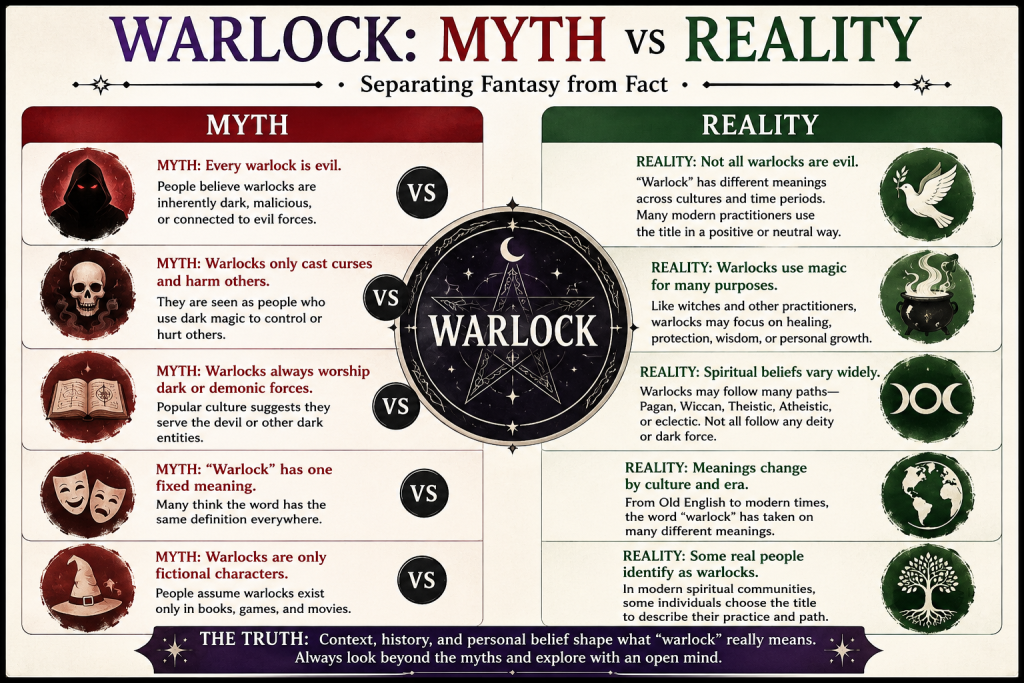
These images come largely from modern storytelling rather than historical reality. Fantasy novels, films, and games leaned heavily into dramatic extremes, flattening a complex cultural label into something theatrical and exaggerated. Over time, repetition turned fiction into assumed truth.
Throughout history, this term reflects social fear and symbolic meaning far more than documented supernatural behavior. The reputation of the warlock was shaped by suspicion, religious tension, and storytelling, not by evidence of chaos or corruption.
Using the Term Warlock, Today!
In spirituality today, some people use the term warlock to describe a path centered on autonomy, intention, and symbolic practice rather than supernatural power.
When used today, the label often refers to practices such as:
- Rituals used for reflection and focus.
- Energy-based meditation or visualization.
- Symbolic actions designed to reinforce intention.
These approaches closely resemble what psychologists describe as structured ritual behavior, such as activities that influence attention, belief, and emotional regulation rather than external forces.
Anthropologists have long observed that ritual appears in nearly every culture, serving psychological and social purposes regardless of whether participants believe in literal magic, according to Britannica.
Warlocks and Magic
Historically, magic was not a separate or mysterious category of life. It was woven into everyday survival and understanding. Practices labeled as magic often included:
- Knowledge of plants and remedies.
- Seasonal and agricultural observances.
- Symbolic rituals marking change or intention.
- Divination is used for reflection and decision-making.
Viewed through a modern lens, many of these practices align with mindfulness techniques, visualization, and symbolic action. According to the American Psychological Association, research shows that ritualized behavior can reduce anxiety, increase confidence, and strengthen a sense of personal agency, even among people who do not believe in anything supernatural.
Understanding warlocks through this grounded framework removes fear from the equation. What remains is not mysticism, but insight into how humans have always used symbols, structure, and intention to navigate uncertainty.
Psychological View on Warlocks and Magic
When you look at a warlock from a psychological viewpoint, it shows more than just belief in supernatural powers. It shows the desire for humans to have control in uncertain environments. Psychologists and anthropologists have observed symbolism of rituals and intention sets for years to help people manage uncertainty, change, and stress.
When history and society labeled magic, chances were that it acted as a structured way to cope with illness, fear, and unpredictability. Rituals and actions can help to increase a sense of control, improve confidence and focus, and reduce anxiety in hard situations. According to the American Psychological Association, it talks about how rituals (even when they aren’t tied to a certain belief) can affect emotional regulation in performance.
When looking at it this way, the warlock archetype can be seen as someone who used the system to influence internal and external experiences. This can be seen spiritually and psychologically, and both are similar.
Warlocks and Pop Culture
Pop culture has changed the way that people see warlocks. Movies, television, novels, and games often show warlocks as powerful spellcasters who work with dark forces and live in secret societies. These ideas are interesting, but aren’t historically accurate.
Pop culture shows warlocks such as:
- Theatrical.
- Extreme.
- Lacking morals.
- Conflicted by fate.
- Against authority.
Even though this can be entertaining, it often blurs the lines between history and myth. It also can also reinforce the idea that spiritual independence is dangerous and corrupting.
According to Smithsonian Magazine, historians talk about fantasy amplifying social anxieties instead of reflecting reality. A warlock can become a word for fear about power, secrecy, and independence.
Understanding this helps people to separate symbolic storytelling and history.
Real-Life Ideas About the Warlock Archetype
While very few people today openly call themselves warlocks, the themes historically associated with the term still show up in modern spiritual identity and practice.
Reclaiming the Word Warlock
Some contemporary practitioners intentionally reclaim the word warlock as a symbol of self-direction. For them, it represents independence from rigid belief systems rather than allegiance to anything dark or harmful. These individuals tend to emphasize ethical intention, personal responsibility, and self-awareness over tradition, hierarchy, or inherited authority. The label becomes less about power and more about sovereignty.
Historical Accusations and Society
Looking at historical records, men accused of being warlocks were often people who existed at the edges of their communities, like healers, scholars, or individuals who challenged accepted norms. In many cases, accusations emerged during periods of political tension or social instability rather than from evidence of wrongdoing. The label functioned as a tool to isolate differences, not to describe actual behavior.
Spiritual Practice Without Labels
Many modern spiritual practitioners avoid titles altogether. They may engage in meditation, ritual symbolism, or intuitive practices without identifying as witches, warlocks, or anything else. Their experiences mirror the same human behaviors that once carried controversial names, but without the weight of stigma. What matters to them is engagement with meaning, not classification.
Across these examples, the common thread is not belief in magic, but intentional interaction with inner experience.
Ethics and Responsibility
One of the clearest distinctions between historical fear and modern practice is the role of ethics.
Responsible practitioners, regardless of how they identify, typically emphasize:
- Consent.
- Non-harm.
- Personal accountability.
- Psychological grounding.
Historically, accusations of warlock activity were rarely considered with intent. Modern approaches reverse that pattern, placing intention and impact at the center rather than symbolism or labels. This ethical framing helps separate reflective spiritual practice from superstition and fear-based narratives.
Are Warlocks Real?
This answer depends on what you believe is real. If real means that there are individuals who are casting spells and using supernatural things, then there is no evidence to support this. If real means people who engage in rituals, symbols, and intuitive practices, then this is a yes.
According to Britannica, anthropologists talk about how humans across cultures create symbolic systems to help them interpret the world. Warlocks were once part of history, and this is known throughout the universe.
This can mean that warlocks are as real as culture and psychological phenomena are.
Science and Skeptics
Scientific ideas don’t support supernatural powers that are attributed to warlocks. But science does talk about the effects of ritual, belief, and symbols when it comes to human behavior. According to cognitive science, it shows that focus, expectations, and narrative can influence how people see things and how they make decisions.
Skepticism doesn’t get rid of personal meaning; it just changes it. This allows belief and critical thinking to work together. One might like the symbolic power of spiritual archetypes without accepting the literal interpretations of what they mean.
This allows belief and critical thinking to work together.
Why The Word Warlock is Used Today
The word warlock is used today because it shows how curious people are. In a world of institutional thinking and standardized systems, this word shows hidden knowledge and rebellion from the past. The warlock is someone who represents a figure that operates out of strict structures.
This doesn’t mean that it is about magic, but it is about understanding what it means for you.
Understanding Warlocks and Spiritual Labels
Readers who hear about warlocks or other spiritual identities can benefit from asking questions such as:
- Is this about curiosity or manipulation?
- Does it encourage people to be dependent and responsible?
- Is this practice ethical?
- Is this practice psychologically grounded?
- What is being said? Is it symbolic or literal?
Critical thinking doesn’t need to be ignored, but there should be discernment when thinking at any time.
Final Thoughts: A Warlock Isn’t a Villain
A warlock isn’t just a character in a fantasy, a villain or supernatural being, but according to history, they are described as people who went outside certain belief systems and were labeled for a period. As time went on, religion, fear, and storytelling changed that label into something even darker than it was in the past.
In our world today, understanding what a warlock means shows that you understand how societies respond to spiritual independence. It shows how language can make a difference in how curiosity can change the way people see things. When you approach the word warlock thoughtfully, it becomes less about magic and more about meaning.
Compelling and nuanced. The article does a fine job disentangling myth from sociopolitical function, showing how the term ‘warlock’ operated as a mechanism of exclusion. I value the emphasis on ethics and psychological framing, which converts folklore into tools for understanding agency and cultural control rather than demonizing difference.
This is an excellent synthesis of linguistic history, cultural power dynamics, and contemporary ritual practice. By tracing wǣrloga from an oath-breaker to a symbol of spiritual independence, the article illuminates how religious consolidation, social anxiety, and literary tropes converted moral labels into mythic threats. I appreciate the balanced use of anthropological and psychological perspectives—showing ritual as both social technology and coping mechanism—while urging ethical responsibility in modern reclamation. It encourages readers to separate narrative dramatization from historical evidence and to engage with spiritual identities thoughtfully.
Great follow-up: I especially liked the note about modern practitioners choosing not to use labels. That felt empowering. Whether someone reclaims “warlock” or avoids names entirely, emphasizing consent, non-harm, and psychological grounding seems like the healthiest path forward for spiritual practice.
Nice read. I appreciate how the post separates folklore from social forces, explaining that fear, politics, and control shaped the warlock image more than any concrete evidence of magic. It encourages curiosity and critical thinking while being respectful to spiritual practices.
Informative and balanced. I appreciate how the author places ritual behaviors in psychological and anthropological context, linking them to coping, intention, and social practice rather than supernatural claims. The section on reclaiming labels feels hopeful, and the ethics checklist is a sensible guide for anyone exploring these traditions.
A thoughtful piece that reframes a loaded term with nuance. I liked the way it highlights ritual as psychological practice—tools for focus and coping—rather than inherently supernatural acts. The history of labeling and marginalization feels particularly important, and the article offers constructive paths for reclaiming language with ethical awareness.