
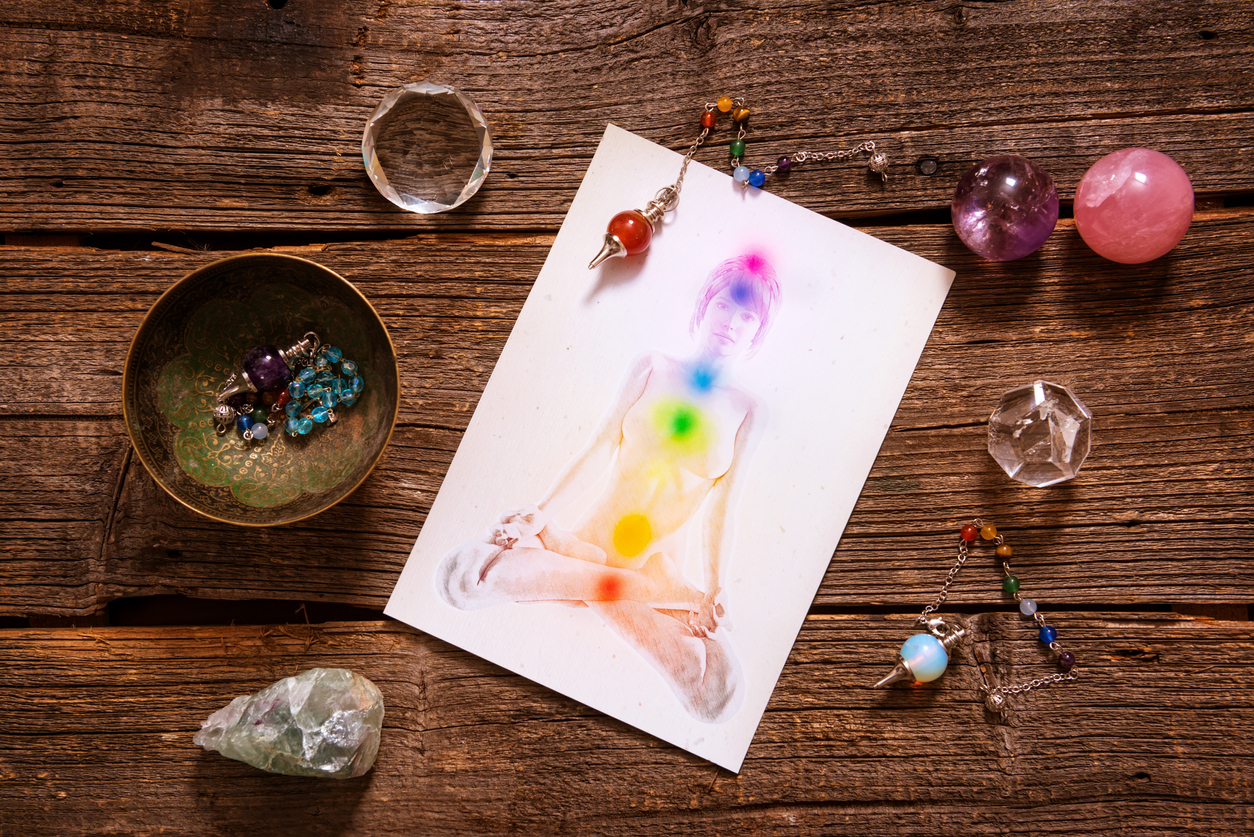
Aura reading uses color as spiritual language. You may find a color helpful for describing a mood, an intention or a quality you want to explore. Its meaning need not become a diagnosis or a permanent label for you—or anyone else.
What does an aura color mean?
Different readers use different systems. Some describe impressions around a person; others work with visualization or an aura photograph. Ask which approach is being used and what the interpretation means within that practice.
A color does not establish intelligence, honesty, illness or a person’s future. You can appreciate the symbolism without treating it as a complete explanation of someone’s life.
A color palette for reflection
These associations are prompts, not diagnoses or a ranking of people. Readers and traditions may interpret colors differently.
Red
Vitality and motivation
Where would a manageable action help?
Orange
Creativity and warmth
What would I enjoy trying without needing to excel?
Yellow
Curiosity and optimism
What question would open a little space?
Green
Growth and care
What needs tending, and what can be shared?
Blue
Communication and calm
What do I need to say or hear more clearly?
Turquoise
Compassion and expression
Can I be kind while keeping a clear limit?
Violet
Imagination and spiritual reflection
What meaning am I exploring, rather than proving?
Pink
Affection and gentleness
What would a caring response look like today?
Dark or mixed colors
Privacy, complexity and uncertainty
Can I allow this experience to be more than one thing?
Use a color to ask a better question
Suppose you are drawn to blue and connect it with communication. Instead of deciding “I must be a perfectly calm person,” ask where a conversation needs more clarity. You might prepare a question, listen without interrupting or name a boundary.
If turquoise interests you, our turquoise aura guide explores communication and compassion in more detail.
You do not have to see an aura
You can choose a color in your imagination, use a journal or simply reflect on one of the questions above. Staring at yourself or another person until you see a glow is not necessary.
If you enjoy meditation, keep it comfortable and brief. Our beginner routine gives you options that do not require an unusual visual experience.
What to ask about an aura photograph
Ask how the image is produced, what information the equipment uses and what the fee includes. Some systems use hand-sensor readings to create colored overlays. A colorful portrait can be a meaningful keepsake without being a medical scan or a verified record of a spiritual field.
Do not use a photograph to choose treatment, diagnose yourself or decide whether another person is safe. You may also decline a reading or purchase if the explanation is unclear.
Dark colors do not mean you are bad or broken
Do not turn color symbolism into a moral hierarchy. Feeling grief, anger or uncertainty does not make your presence dirty. Nor does a reader’s description require a paid cleansing to make you acceptable.
If a symbolic reset feels helpful, choose something gentle: a journal entry, a quiet moment or an ordinary grounding practice. You do not have to remove normal feelings before you deserve connection.
Keep curiosity and consent together
Ask before offering an interpretation about someone else. Listen to how they describe their own experience rather than insisting a color tells you more. Let the palette support a conversation, not replace one.
“Seeing auras requires psychic giftings.” That’s quite a claim! Is this article suggesting we’re all supposed to become psychics now? Honestly sounds like a good plot for a fantasy novel.
While I appreciate the positive perspective, I can’t help but wonder about the scientific validity of this claim. Are there studies that actually support these ideas? It feels more like pseudoscience than anything concrete.
“Auras are fascinating energy fields that can tell us so much about ourselves and others.” This sentence resonates with me deeply! It’s all about understanding emotional connections and energies in our daily lives.
This is just another new-age belief with no real evidence behind it. Auras? Seriously? We should focus on more tangible issues instead of chasing colorful illusions.
🙂 I mean, if seeing colors around people is what makes someone happy, who are we to judge? Let them enjoy their rainbow world while the rest of us stick to reality!
I see your point, Zgreen, but dismissing these experiences outright may prevent us from understanding aspects of human perception and emotions that science hasn’t fully explored yet.