
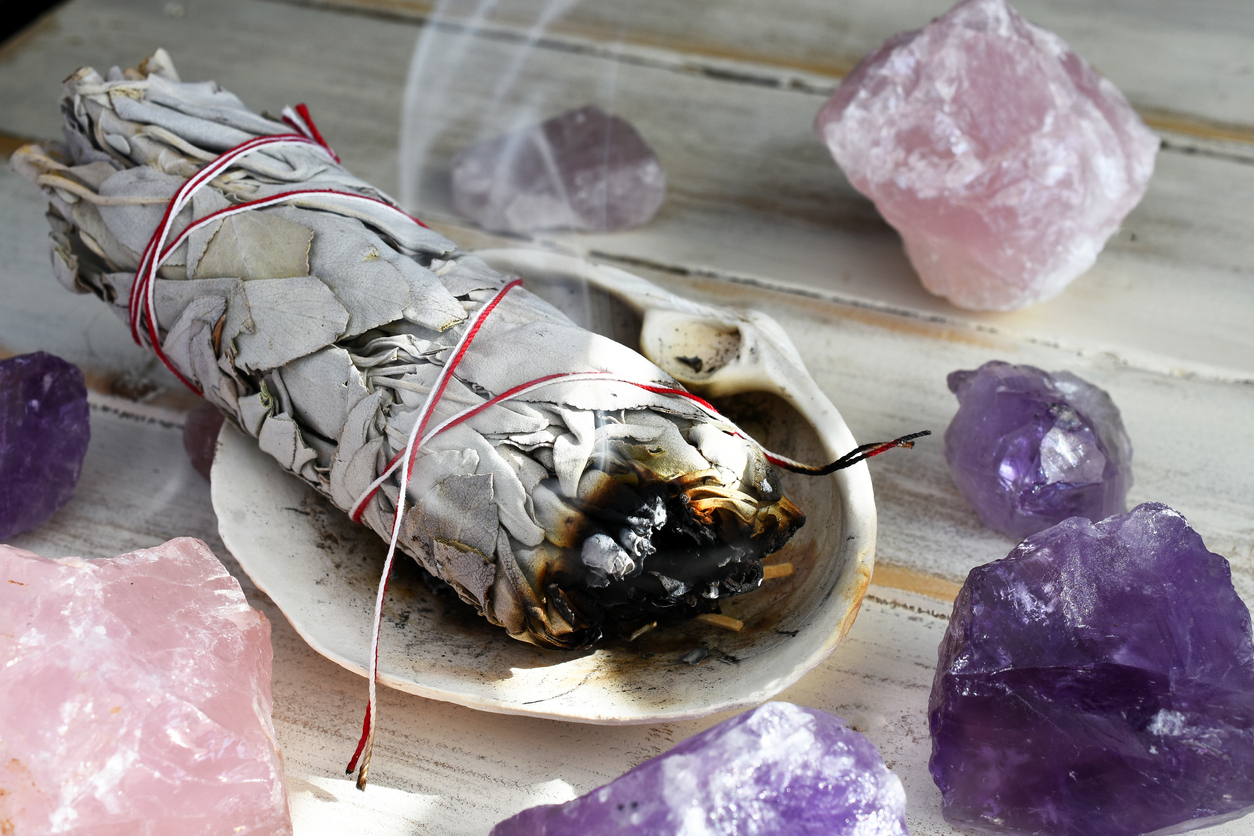
For some spiritual practitioners, a space-clearing ritual marks a fresh beginning: after an argument, before meditation or when settling into a new room. Sage is one possible tool, not a requirement. The intention and the way you care for the space matter more than buying a bundle.
Know which plant and practice you mean
“Sage” can refer to different plants. White sage, Salvia apiana, is native to parts of Southern California and Baja California. It has particular significance in Indigenous traditions; those traditions are not one interchangeable ceremony.
The University of California’s white-sage fact sheet discusses the plant’s habitat, cultural uses and pressures on wild populations. If you buy it, ask where it was grown and how it was sourced. Do not collect plants from land without permission.
Learning about a tradition does not make you authorized to represent its ceremonies. A personal tidying-and-intention ritual can remain your own practice without claiming an Indigenous identity or ceremonial role.
Smoke is not an air-cleaning shortcut
Do not treat burning sage as a way to disinfect a room or remove a stated percentage of bacteria. Burning material adds smoke; the EPA’s indoor-particle guidance identifies combustion sources such as incense and candles as contributors to particle pollution.
A spiritual feeling of freshness is different from improving measured air quality. Cleaning, addressing damp or mold and following appropriate ventilation advice remain practical tasks, not something a ritual replaces.
Start with a smoke-free option
This is often the simplest choice for shared homes, rentals or rooms where someone dislikes smoke or fragrance. A spray is not automatically suitable either; check ingredients, sensitivities and the people and animals sharing the space.
A simple clearing ritual without burning anything
- Ask permission.Agree with the people sharing the room before changing sound, scent or objects.
- Clear one surface.Put away what does not belong and clean the area using suitable products.
- Choose an intention.Try “May this room support rest and honest conversation.” Use words that fit your beliefs.
- Mark the change.Use a quiet bell, a spoken intention or a moment of silence. Nothing special needs to be purchased.
- Make the intention practical.Choose one ongoing habit, such as a clear bedside table or agreed quiet time.
If you choose to burn a product
Follow the product’s directions and local fire rules rather than a generic online recipe. Use a suitable stable heat-resistant holder, keep it away from flammable materials and never leave it unattended. Do not disable smoke alarms or ignore a building’s smoke restrictions. Fully extinguish it before leaving the area.
If smoke causes irritation or anyone sharing the space objects, stop and choose another approach. No spiritual benefit requires you to tolerate an uncomfortable or unsafe environment.
Keep the meaning gentle
You can use a ritual to express a wish for change without deciding that a room is contaminated by an entity. If someone says only their expensive cleansing can keep you safe, pause before paying.
For broader practical ideas, explore refreshing the atmosphere at home. For a personal reset after a difficult day, use our negative-energy reflection guide or beginner meditation.
While I appreciate the intention behind this article, I find it hard to believe that burning sage really makes a difference. It sounds more like a trend than a genuine spiritual practice. Science should be at the forefront of such claims!
This article provides some interesting insights into the historical context of sage use for cleansing. Understanding its background is crucial for those interested in holistic healing methods. However, I’d love to see more scientific backing to these practices.
Agreed! While there’s definitely a cultural significance to burning sage, I think people should approach it with an open mind and not just follow trends blindly.
Totally! More research could make these practices even more credible. Plus, not everyone might resonate with sage; alternatives should be explored too!
‘Spiritual hygiene’? Really? This sounds like another way to sell products to people looking for answers. How did we get here? Just clean your space regularly instead of following some mystical ritual.